Industry
What features should an Applicant Tracking System (ATS) include for high-volume Amazon DSP hiring?
An Applicant Tracking System (ATS) built for high-volume Amazon DSP hiring needs to do more than store resumes in a database.

Playbooks and stories for DSP owners — from launch week to a fully staffed station that hits its scorecard every week.
An Applicant Tracking System (ATS) built for high-volume Amazon DSP hiring needs to do more than store resumes in a database.
An Applicant Tracking System (ATS) is software that manages the full hiring pipeline for Amazon Delivery Service Partners, from posting a driver job to tracking every applicant through screening, documentation, interviews, and hire.
AI recruiting for delivery and courier companies works in two connected steps: an AI Recruiter phone-screens every driver applicant within minutes of applying, verifying eligibility and scoring fit before a human ever gets involved, and an AI ATS then takes over the pipeline, texting candidates, booking interviews, and logging data automatically.
FMCSA driver qualification files, drug and alcohol clearinghouse queries, MVR pulls, and the eligibility screening that keeps every route legal — the compliance checklist DSP owners actually need.
Most DA turnover is decided before the first block is ever driven. Screening for the realities of the job — pace, physicality, schedule — is what gets new hires past their first 90 days.
Generic applicant tracking wasn't built for weekly route coverage. What to actually compare when evaluating DSP hiring software — screening automation, pipeline visibility, and speed to seat.
Q4 volume doubles and every DSP at the station is hiring from the same pool. A staffing playbook for peak — forecasting, bench building, screening at volume, and post-peak retention.
DSP driver turnover regularly outruns most frontline industries. The real drivers — pace, scorecard pressure, scheduling, and mismatched hires — and what measurably reduces it.
Amazon hands you the brand, the routes, and a rate card — the operational lift is entirely on you. The capital, contracts, compliance, and hiring plan a new DSP needs to hit launch day fully staffed.
Every scorecard number is really a reflection of your team. How pay structure, recognition, referrals, and a full hiring pipeline turn driver retention into an operational lever.
The owners who scale aren't the ones who work the hardest — they're the ones who've figured out what deserves their personal attention and what should run on a system.
A DSP doesn't chase outside clients — growth runs through Amazon itself. How scorecards, reputation, and staffing readiness earn you additional routes and a second station.
The owners who grow past their first station track operational, financial, and workforce metrics together — from cost per stop to turnover by tenure band to time to fill.
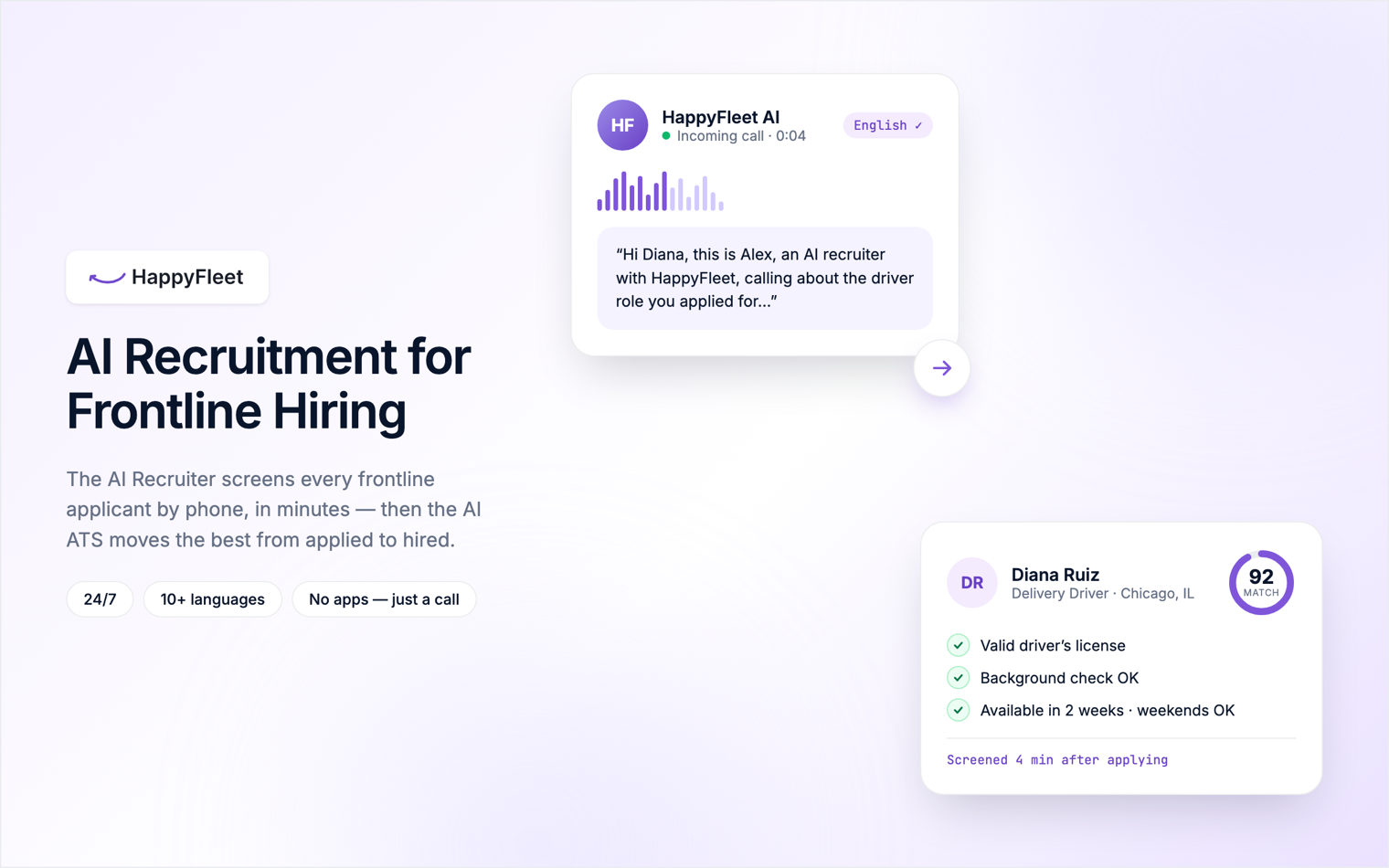
HappyFleet's AI Recruiter phone-screens every frontline applicant in minutes, and the AI ATS moves them from apply to hire. Watch the 2-minute overview.
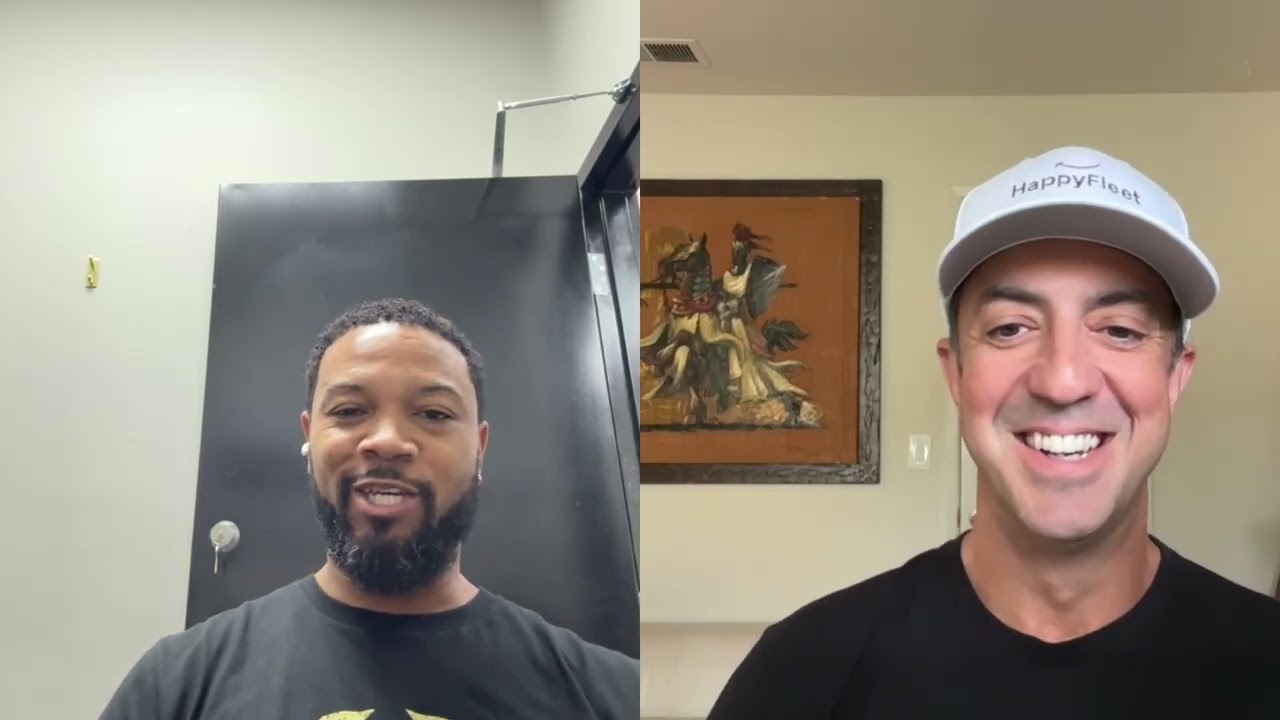
Nokia Crane went from bank manager to UPS seasonal driver to FedEx operations manager before winning an Amazon DSP contract in Georgia. On the HappyFleet podcast, he talks about leadership, safety culture, a 90% electric fleet, and building a company his community can rely on.
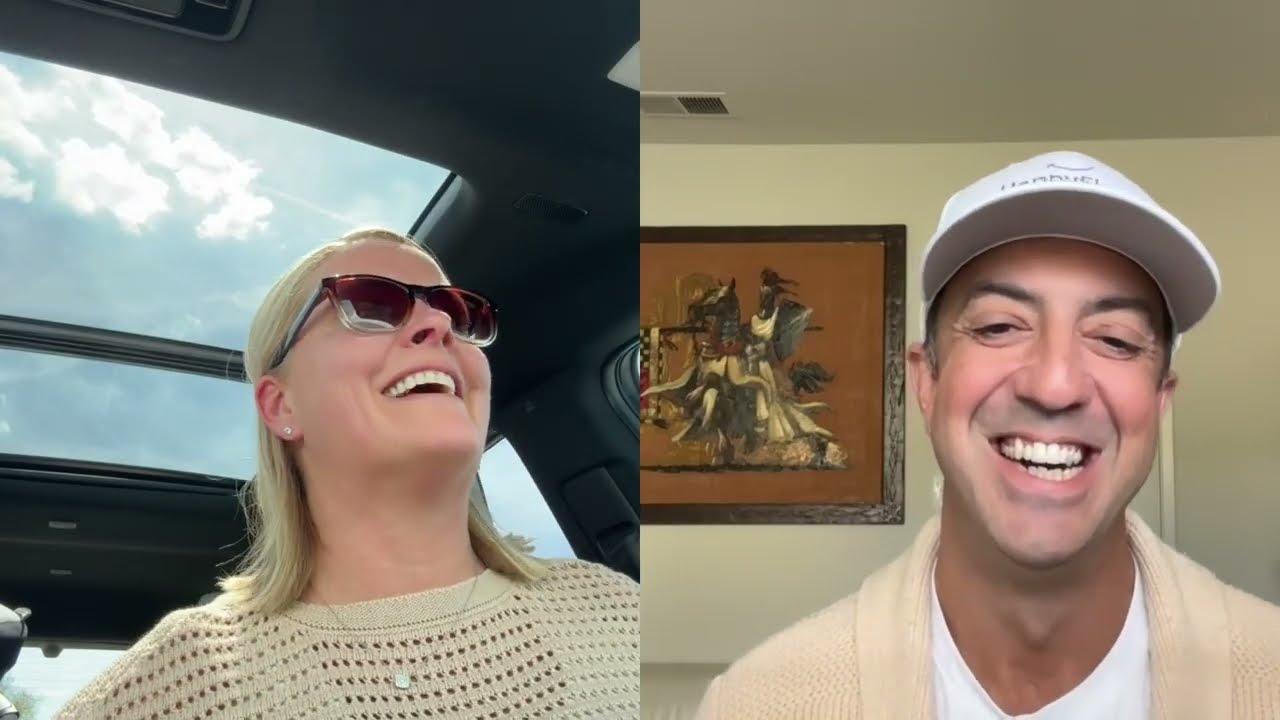
Kim Hoffmann ran military dental logistics across 30 states before launching her Amazon DSP in Madison, Wisconsin. On the HappyFleet podcast, she explains how that operations background shaped her approach to hiring, screening technology, and scaling to 40-plus routes.
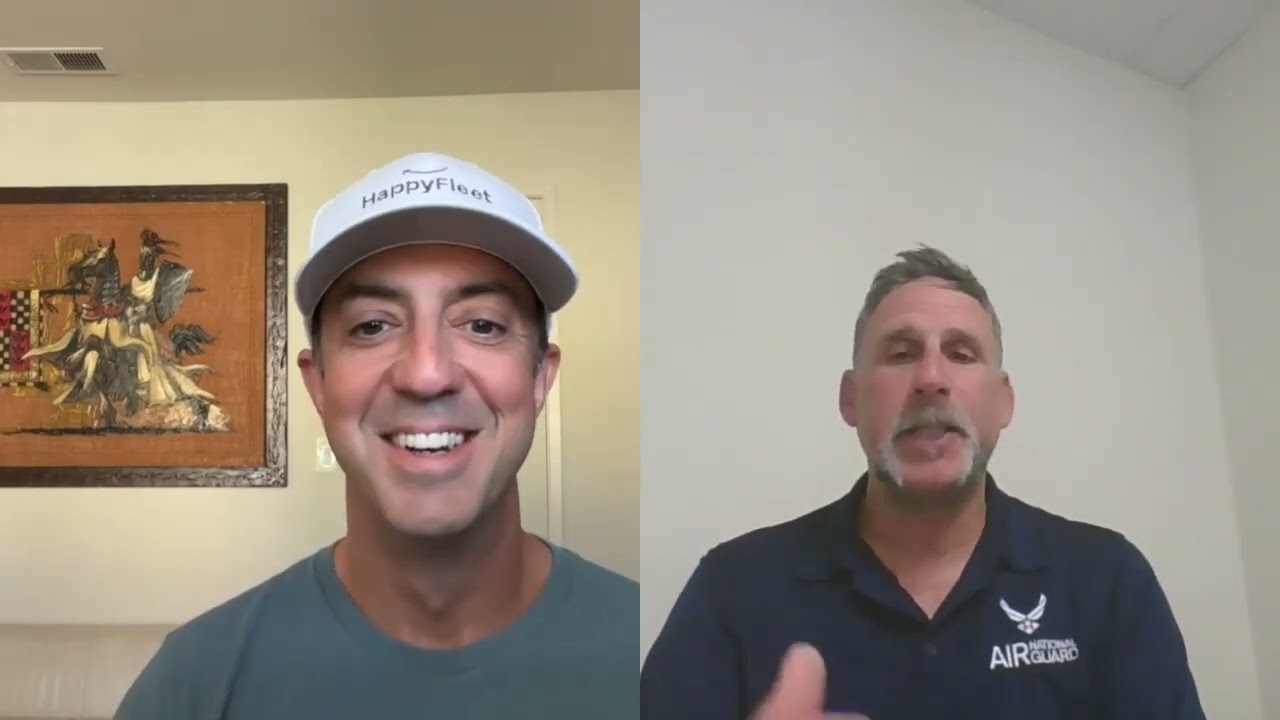
Tony Razza bought his first truck at 19 and built Elite Home Delivery into a 75-truck operation. On the HappyFleet podcast, he explains why he walked away from both an Amazon DSP and a FedEx ISP, and the hiring lessons from four decades in last-mile delivery.
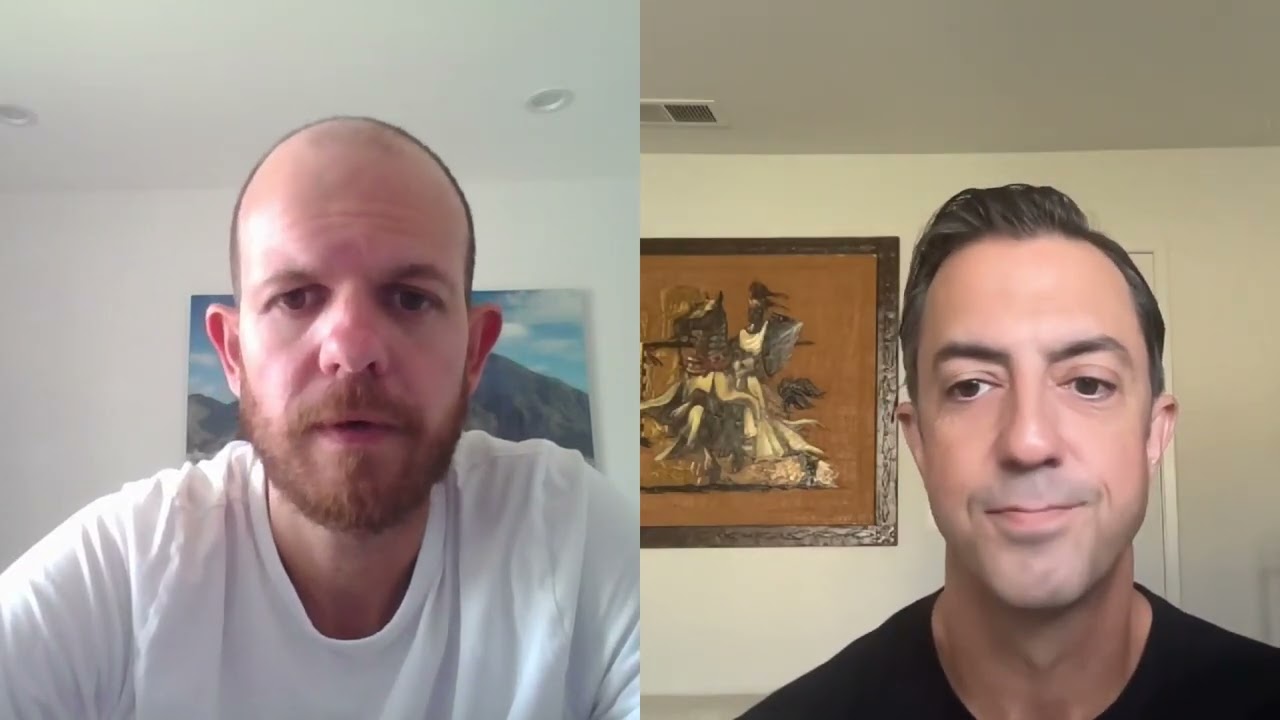
Rafael Garcia left a law career in Venezuela, emigrated to the U.S., and built Gallo Logistics into a 35-route Amazon DSP in Florida. On the HappyFleet podcast, he breaks down promoting leaders from within, surviving Florida's brutal insurance market, and the no-code AI tools he's using to automate the back office.
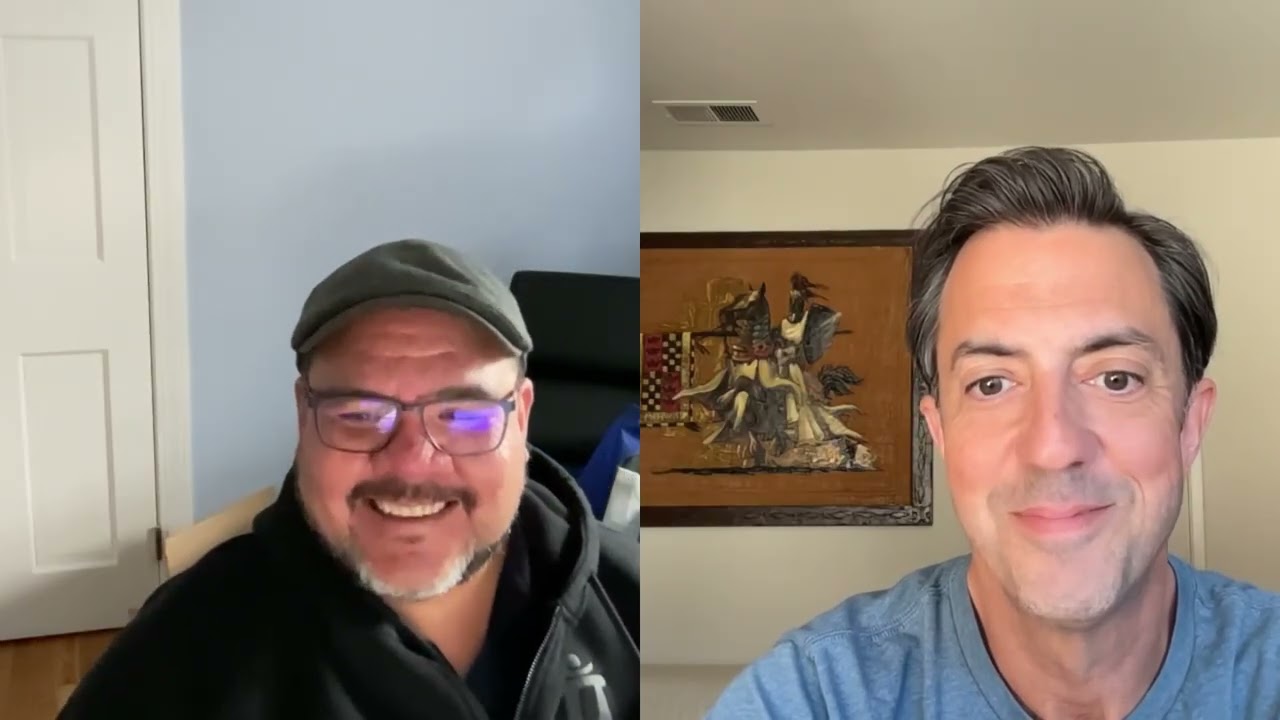
Jose went from delivery driver to running All for One Logistics — 120 employees and 60 routes in five months. On the HappyFleet podcast, he breaks down the preparation, hiring strategy, and financial reality behind one of the fastest ramps in the program.
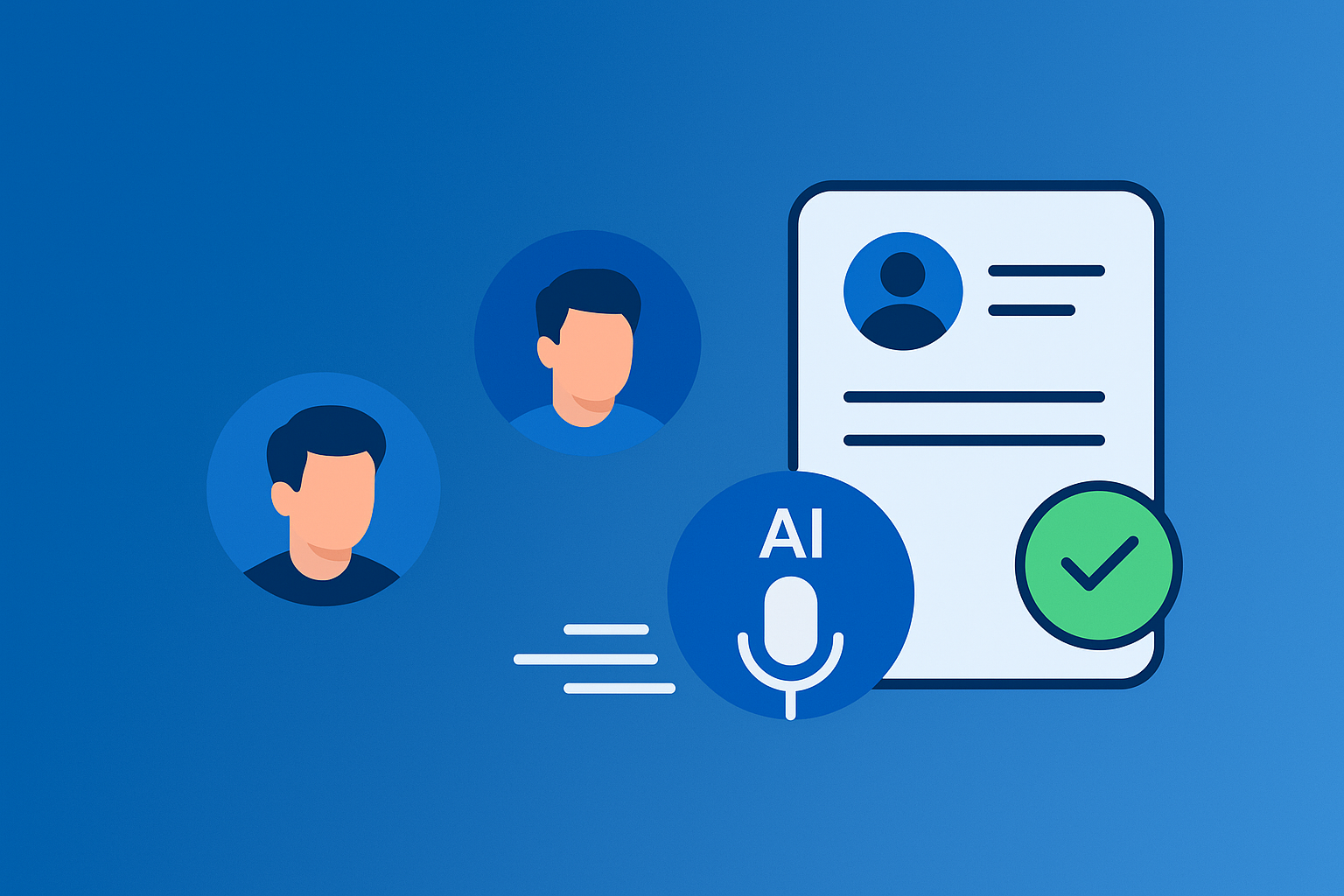
F4L Trans, an Amazon DSP, reduced hiring bottlenecks by automating candidate screening, orientation, and follow-up with HappyFleet's AI recruiter, saving 10+ hours weekly while improving candidate engagement.

HappyFleet has joined Amazon's Vendor Exchange Program, bringing AI-powered voice interviews to Amazon DSP hiring workflows with proven results: 90% faster screening, 4× higher candidate engagement, and 10+ recruiter hours saved weekly.
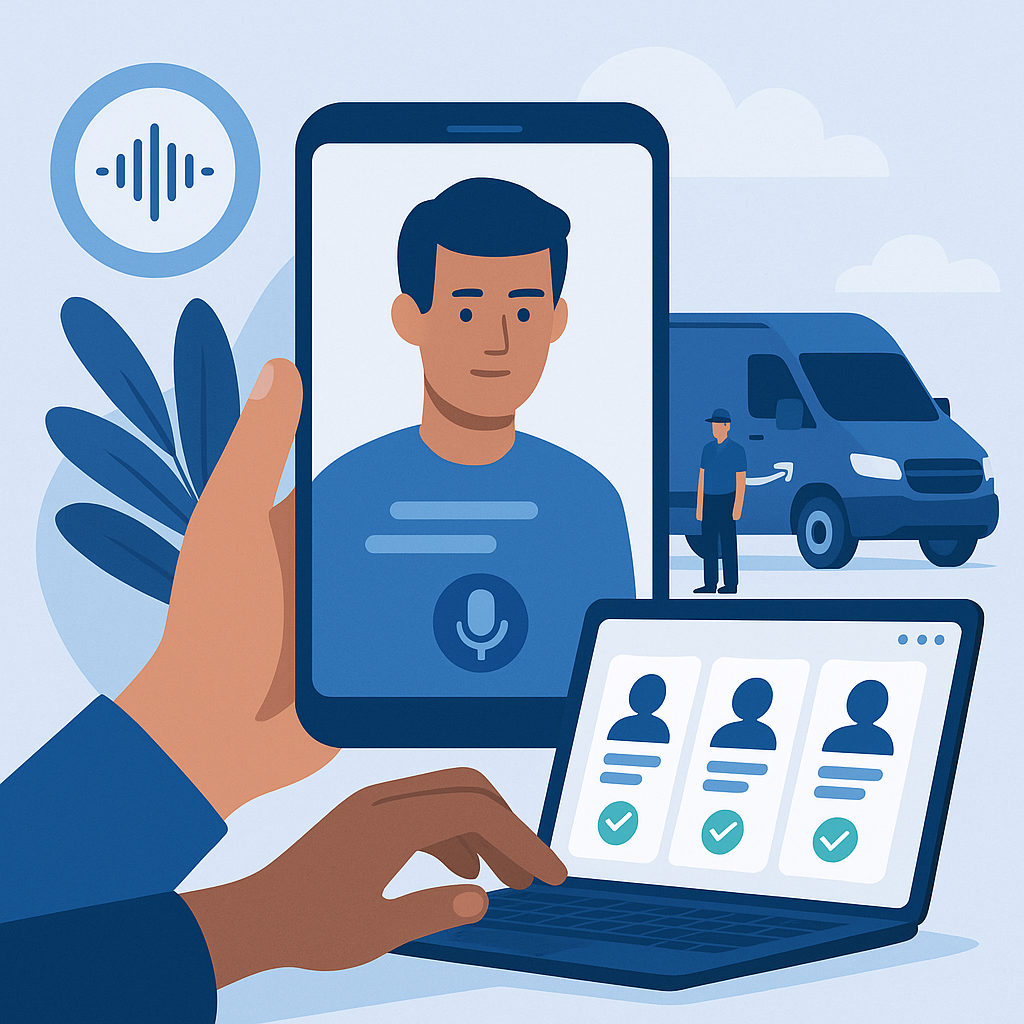
An Amazon Delivery Service Partner transformed their hiring process using AI-powered phone screenings, reducing screening time from 25+ hours to 1 hour while improving second-round show rates from 15% to 76%.
HappyFleet's AI recruiting tool enabled Duality Ventures to reduce candidate screening time from 5 days to 1 day while automating 87% of manual hiring work, allowing teams to prioritize top candidates and accelerate hiring decisions.